Experienced managers who hear this should know what’s going to happen in this kind of company.
Soon Shockley’s personal management methods were at odds with his own company, and eight key employees rebelled, known in the computer world as the “eight rebellion incident,” and in 1957 they jumped the corporate board to form fairchild semiconductor, which later developed the first integrated circuit. Shockley, on the other hand, went from bad to worse, being sold twice and closed for good in 1968.
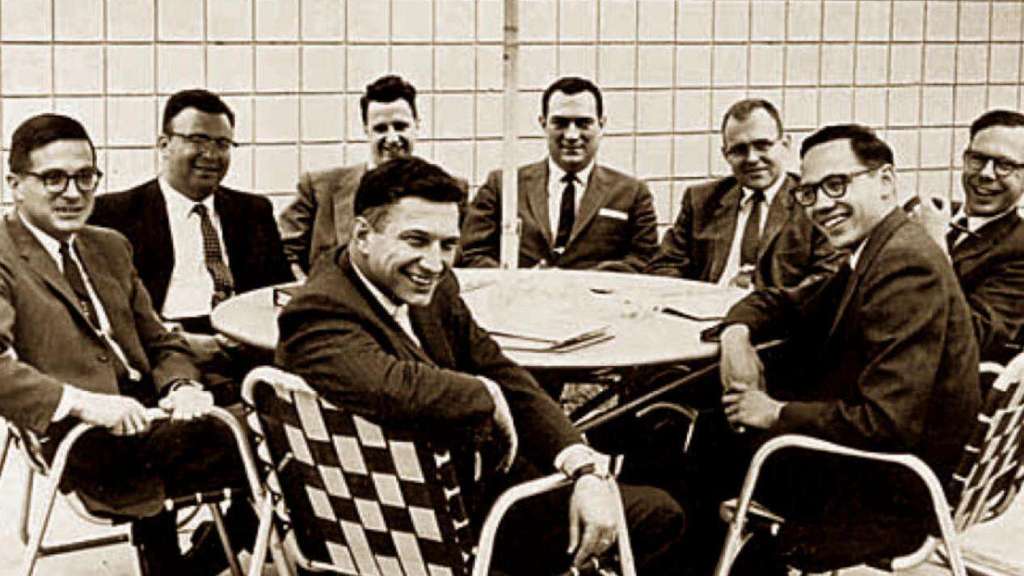
Fairchild profitability rose sharply from the 1960s. Fairchild semiconductor’s investment company, which had invested heavily in fairchild semiconductor in the early years, began to exploit the rights of the deal, taking full ownership of the eight founders’ shares and siphon off a lot of profits, while using fairchild’s profits to invest in a lot of unprofitable businesses.
Fairchild formed a conflict with its parent company when eight of its founders, including Mr. Noyce, decided that more money should be spent on electronic semiconductors. As the company prospered, fairchild semiconductor and some of its core employees began to “think about life” -whether to remain an employee at fairchild or to become the company’s own boss.
In August 1968, noyce resigned with Moore. They had been the last of the eight rebels to leave. Their new company is Intel.
In addition to noyce, fairchild semiconductor director of sales and seven fairchild employees founded AMD.
To understand the history of silicon valley, many computer historians agree, you need to know about the early Fairchild Semiconductor. The company, once the largest, most innovative and exciting semiconductor manufacturer in the world, laid a solid foundation for silicon valley’s growth. More importantly, the company has nurtured thousands of technical and management talents for silicon valley, is the electronic and computer industry “west point”, is a veritable “cradle of talent”.
 Vincentmedia