做自己,因为别人都在做自己。
– Oscar Wilde
这是我新博客的第一篇文章。我刚开始写这个新博客,因此请继续关注。在下方订阅,以便在我更新新文章时您会收到通知。
Vincentmedia
做自己,因为别人都在做自己。
– Oscar Wilde
这是我新博客的第一篇文章。我刚开始写这个新博客,因此请继续关注。在下方订阅,以便在我更新新文章时您会收到通知。
Mixed aesthetics are everywhere in life, so what is aesthetics?
The concept of aesthetics was first put forward by the German philosopher baumgarten in 1750. He believed that art needed an appropriate place in the philosophical system, so he established a discipline of Aesthetic understanding and called it Aesthetic.
Aesthetics is a subject that studies the aesthetic relationship between man and the world. Aesthetic activity is a kind of human life experience activity which takes the image world as the object, and it is a spiritual and cultural activity of human beings

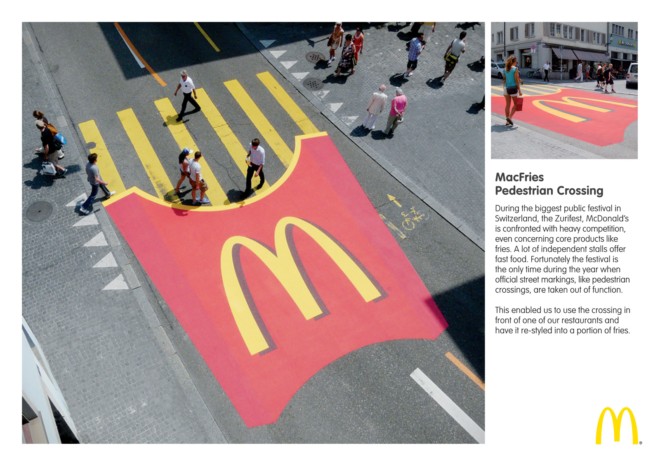
The definition of remix aesthetics is to express two unrelated things in an artistic way to inform or appeal to people.
There are many remix aesthetics in life, and the most common one is the advertising industry.
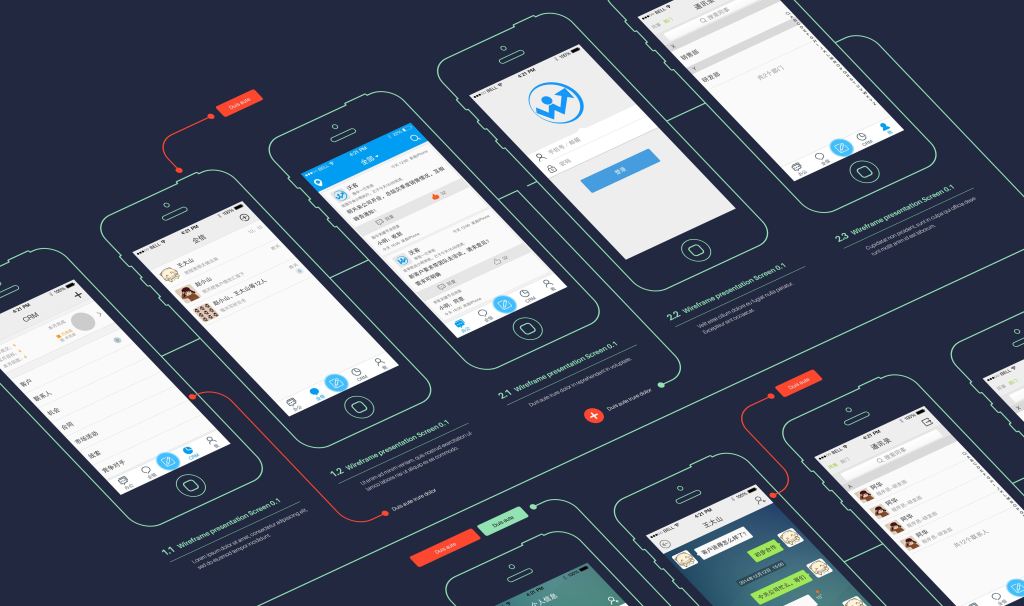
The Internet is a popular area for individuals, businesses, organizations and media. It can not only provide individuals and businesses with online information inquiry, leisure and entertainment, but also provide individuals and businesses with online business work. The initial state of the Internet is to query information, and gradually developed into a platform used by enterprises and owned by individuals; This is also the lifestyle, work style and social development trend of many young people nowadays. This is a relatively basic performance, personal leisure life can be directly online inquiry, selection, selection of different groups; On the one hand, you can choose different sites or platforms online to interact or share information online. On the other hand, you can adjust the online time and view the content according to your personal time. With the introduction of the Internet into thousands of households, many shops have moved from offline to online, which is also the shopping mode favored by many young people. Slowly let a lot of new enterprises, traditional enterprises, entrepreneurial business crowd online business, but also let individuals online store operations. According to the network application process online operation, the Internet will be more and more sophisticated for business, network category will be more and more clear. Iii. The international Internet is aimed at the whole world, that is to say, the Internet is open to all the public. It can be carried out online regardless of platform, field, crowd, etc. At the beginning of scientific research, the development is relatively slow. With the birth of the computer, plus the progress of the Internet for scientific research has increased great convenience; At the same time, it also adds new inventions and progress for the country and society. V. innovation many times, many people with ideas, creativity and characteristics are in work, design and social concepts that cannot be directly realized in reality for some reason; Through the interactive network online organization, interaction, and the accumulation of the corresponding hobby of the crowd together to serve the community, for the public to contribute a force, but also can actively collect real life in the real idea. The Internet will also be in line with the needs of the population, social changes, life dynamic progress, it is suggested that people engaged in the Internet and people using the Internet, enterprises and other more friendly use of it, and let it for the public to better benefit and create a better future for society.
“Fairchild semiconductor is like a mature dandelion,” apple’s Steve jobs once said. “when you blow it, the seeds of this entrepreneurial spirit are everywhere.”
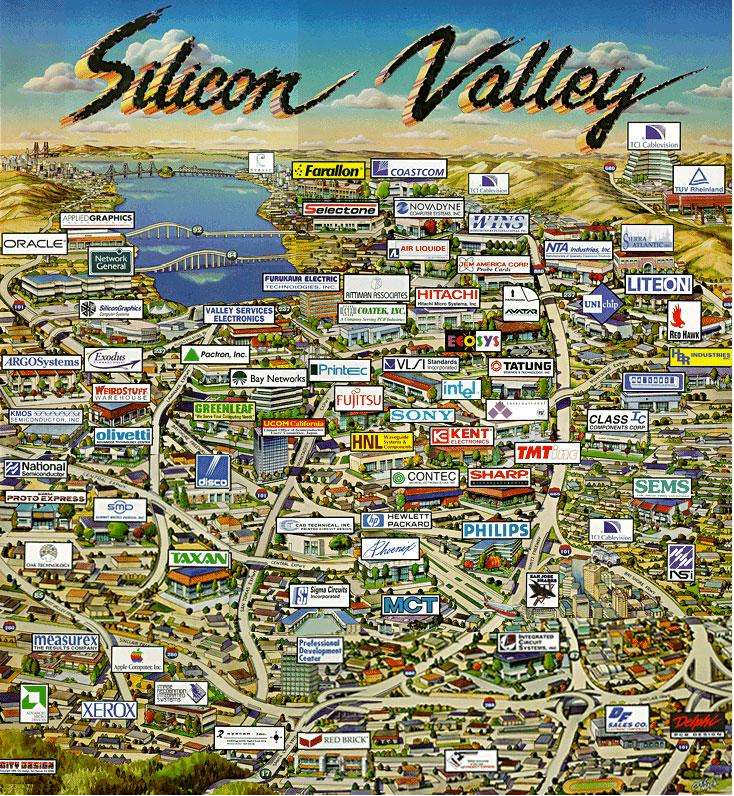
With the brain drain of fairchild, silicon valley gathered too many talents, and all kinds of high-tech companies were born at that time. (speaking of which, we can also explain why there are now three BAT giants in the Internet, and there are so many Internet enterprises around the three giants. In the development process of an industry, some big trees need to grow first, and then it will become a forest.)
At this point, the hardware industry gradually developed mature. Then came the software boom.
In the process of the development of the software industry, we have to mention the names of three companies, IBM, Microsoft and apple
At the beginning of the 20th century, software development was just one of the job functions of a hardware engineer, kind of like the product manager job in the old days where it was a project manager or a marketing manager at the very beginning.
But in the middle of the 20th century, the U.S. SAGE air defense system, developed between 1949 and 1962, was the first major computer project, eventually costing $8 billion. In 1959, Rand established a separate company, the system development corporation (SDC), to further develop the software, which was estimated to require one million lines of code. The rand corporation is one of the most important comprehensive military-oriented strategic research institutions in the United States. The SAGE software development program became one of the most “noble” undertakings in software engineering development. The number of programmers in the United States at that time was about 1,200, with 700 working on the SAGE project.
In addition, in 1954, when American airlines asked IBM to develop the SABRE aircraft reservation system, the first industry-funded software project was launched, a $30 million project employing about 200 software engineers. It was completed in 1964.
Both SAGE and SABRE systems became “programmers’ universities.” Since then many programmers have spread across the country, using what they learned on these big projects to start their own companies.
IBM’s history can be traced back to decades before the development of electronic computers. The company was founded to make typewriters. In 1964, IBM announced the advent of the mainframe with the epoch-making System / 360 mainframe computer. Since then, almost all of the world’s computer development and development of the IBM360 series system as a benchmark, has become an important trend in the world. In this way, the hardware structure and operating system of the computer had the first standard. In 1975, IBM produced four times as many computers as all the other computer manufacturers in the world combined.
Because IBM was too big, the justice department sued, arguing that it was trying to corner the market for general-purpose digital computer systems.
At this time, apple appeared. Jobs persuaded wozniak to start Apple computer in 1976, and the Apple II was launched in 1977. The Apple II became the first personal computer in human history.

Meanwhile, in 1975, Bill Gates dropped out of Harvard University to start Microsoft. Started selling the programming language BASIC.
Then, a lot of things happened to the three companies that will have a profound impact on the future of the software industry.
The first was that IBM, from top to bottom, in the mid-to-late 1970s almost always thought the personal computer was a low-grade thing, not worth the effort. With the apple II on the market and selling more than a thousand units a month, IBM couldn’t sit still and decided to enter the PC market. However, IBM found that it did not have a working personal operating system, so it secretly approached Bill Gates to provide an operating system for IBM’s new personal computers. Moreover, gates was asked to sign a legal document promising to keep secrets about what was said and seen during the meeting, and he did so without hesitation. IBM provided a sample PC design on site! This is IBM’s IBM PC prototype, which is a knock-off of the apple computer. That’s how Microsoft landed a crucial order to design an operating system for the IBM PC.
In 1981, IBM introduced its own personal computer. In addition, IBM adopted the CPU made by INTEL in 1983, which formed the current personal computer industry standard.
Then came the period of market competition between open and closed systems. Jobs was fired from his company in 1985 because of his personality. Since then, the standards and development of personal computers have been determined down.
Well, now that the electronics industry has matured, telegraph and telephone services are available, and personal computers are widely used, operating systems and software are available. So what’s still missing from the Internet?
To connect all these things, we need an agreement. An agreement that they can all read. Here’s how the Internet was born.
The earliest origins of the Internet are the ARPANET of the defense advanced research projects agency, which was put into use in 1969. ARPANET is mainly used for military research purposes, it is mainly based on the guiding ideology: network must withstand the test of failure and maintain normal work, in the event of war (such as suffering from a nuclear strike), when a certain part of the network due to attack and lose the ability to work, the rest of the network should be able to maintain the normal work of communication. ARPANET is a communications network built by the U.S. department of defense to withstand a nuclear attack by the former Soviet union. The early purpose of the Internet, as you can imagine, was a way for people to get in touch after a nuclear attack.
Another important technical contribution of ARPANET is the development and utilization of TCP/IP protocol clusters.
Experienced managers who hear this should know what’s going to happen in this kind of company.
Soon Shockley’s personal management methods were at odds with his own company, and eight key employees rebelled, known in the computer world as the “eight rebellion incident,” and in 1957 they jumped the corporate board to form fairchild semiconductor, which later developed the first integrated circuit. Shockley, on the other hand, went from bad to worse, being sold twice and closed for good in 1968.
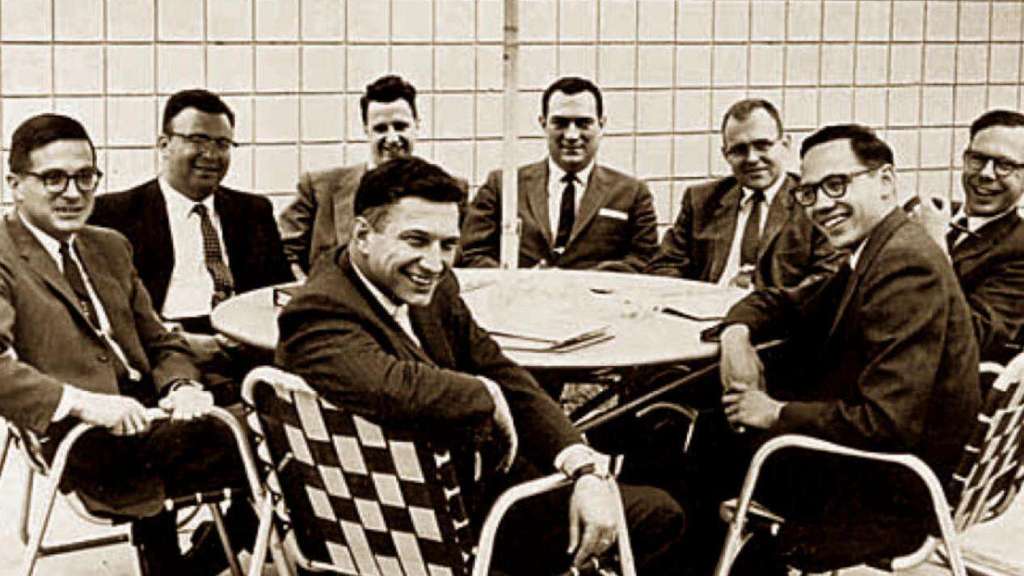
Fairchild profitability rose sharply from the 1960s. Fairchild semiconductor’s investment company, which had invested heavily in fairchild semiconductor in the early years, began to exploit the rights of the deal, taking full ownership of the eight founders’ shares and siphon off a lot of profits, while using fairchild’s profits to invest in a lot of unprofitable businesses.
Fairchild formed a conflict with its parent company when eight of its founders, including Mr. Noyce, decided that more money should be spent on electronic semiconductors. As the company prospered, fairchild semiconductor and some of its core employees began to “think about life” -whether to remain an employee at fairchild or to become the company’s own boss.
In August 1968, noyce resigned with Moore. They had been the last of the eight rebels to leave. Their new company is Intel.
In addition to noyce, fairchild semiconductor director of sales and seven fairchild employees founded AMD.
To understand the history of silicon valley, many computer historians agree, you need to know about the early Fairchild Semiconductor. The company, once the largest, most innovative and exciting semiconductor manufacturer in the world, laid a solid foundation for silicon valley’s growth. More importantly, the company has nurtured thousands of technical and management talents for silicon valley, is the electronic and computer industry “west point”, is a veritable “cradle of talent”.
“origin”
Electronic technology is an emerging technology developed in Europe and the United States and other western countries at the end of the 19th century and the beginning of the 20th century.
In 1875, American Alexander Bell invented the telephone and founded the bell telephone company, which was the predecessor of AT&T.
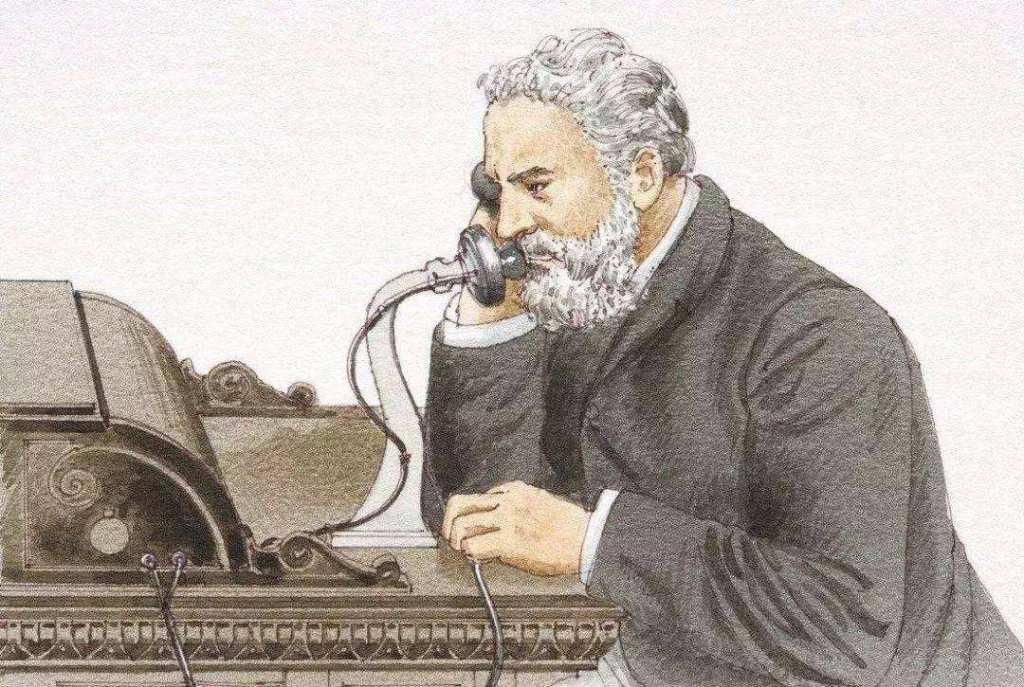
Bell LABS was the birthplace of many important inventions such as the transistor, light-emitting diode, digital switch, communication satellite, electronic digital computer, cellular mobile communication equipment, and communication network. Bell LABS is still in existence and has research and development facilities in Beijing and Shanghai.
So, in the early 20th century, mankind has be able to connect the telephone and telegraph together, then can parse and why more than ten years ago, we are going to surf the Internet to use ADSL, namely “broadband” cat dial-up Internet access, because the phone lines can transmit voice, then it can transmit data, the era of the Internet Posting to indicate such a popular word “multiple killed the cat”, namely the bandwidth is too small, images load can be slow.
Then, in 1947, at bell LABS in New Jersey, three scientists — Dr. Badin, Dr. Blyton, and Dr. Shockley — invented the transistor, a landmark achievement in the history of science and technology. The three scientists Shared the 1956 Nobel Prize in physics.
Dr. Shockley is here to highlight. Not content with his present invention, Shockley wanted to commercialize and market it. Shockley hated bell LABS for making money out of his invention and for producing transistors that were so unreliable as to damage the inventor’s reputation. Coupled with Shockley’s natural organizational skills and aggressive drive, he desperately wanted to be a millionaire.
Then, in 1955, returned to his hometown of Santa Clara valley, which is now in silicon valley, the land whether climate or environment, looks are the most ideal place to open the transistor factory, and then he founded in California “Shockley LABS co., LTD.”, hired many young excellent talents.
Shockley has an eye for talent. After the job information was posted, the letters of application were written by the best minds in the field of electronic research in the United States at that time. He ended up hiring eight talented people. It was the greatest collection of talent ever created, all under 30, at the peak of their talent spurt, and highly competitive.
Joan herney, from the California institute of technology, holds doctorates from the universities of Cambridge and Geneva;
Victor grenick is a researcher at the Stanford research institute; The oldest of the eight.
Eugene Clayton, a 29-year-old manufacturing engineer for general electric;
Gordon Moore is with the Johns Hopkins applied physics laboratory; The man who would go on to become the founder of Intel came up with what became known as Moore’s law.
Robert noyce is from fairco and ford; Also a founder of Intel.
Then there are Julius, blank, jay rust and Sheldon Roberts, all of them. We’ll talk about them next.
HMTL
HTML is used to define the structure of web pages and the meaning of browser content. Using semantic HTML helps with accessibility and search engine optimization. Because CSS is closely related, it also affects how CSS is written. Front-end web development refers to the language that runs in the browser. When these three languages work together, they are each responsible for different things. HTML is the starting point because it is used to add content and structure pages. CSS is used to represent effects and styles, such as colors and fonts. JavaScript is used to add interactivity, such as clicking a gallery or dynamically changing content by clicking a button or page scrolling.
Web fonts and Google Fonts
Typography is the study of the design and use of types, and it is a way to interact and communicate with readers. Fonts are often referred to as fonts or font families, but are actually a group of fonts designed to have a common feature consisting of glyphs. A font is a single file that belongs to a font family or font. Serif fonts are usually characterized by tiny decorative lines at the top or bottom of the letters. Sans serif fonts do not have these trim lines. The script font has a handwritten look. They should be used with caution, as they are often difficult to read in small sizes, all uppercase, or longer text. This font is perfect for displaying code. To set the font family in a web project, use the CSS property font-family. Not all operating systems have the same font installed, or users may have deleted it. If the user does not install the font locally, your font family statement will not display correctly.

Web safe fonts and the font family property
For more options, we can use web fonts. Because it does not require users to install fonts, we are not limited to web-safe fonts. There are two ways: using internal or external sources. The internal font source refers to the downloaded font file, which, like other files, is also included in the project directory. Font-face is used to set the font name and link to the font file. It starts with an at sign and then font-face.
To link to a file in a CSS or images folder, simply add the folder name, followed by a forward slash, and then the file name. Now, suppose you have a folder called fonts to organize all your font files. Now Styles.css is your starting point because you are adding font declarations to your CSS files. The file is in a folder, so you must first navigate up and move out of it. The first step is to move out of the CSS folder using ../. Then add fonts / move to the fonts folder and enter the font file name. Regardless of folder name, ../ is always used to move folders up and down. The entry folder is always defined by the folder name.
The second option for using web fonts is to use external sources, they are third-party services. With this option, you don’t need to download any files or include them in the project’s directory.

Grid Container. A Grid Container is any element with its display property set to grid. In a single view, or single document in the browser, we can have as few or as many grid containers as we like, and we can also nest grid containers inside other grid containers.
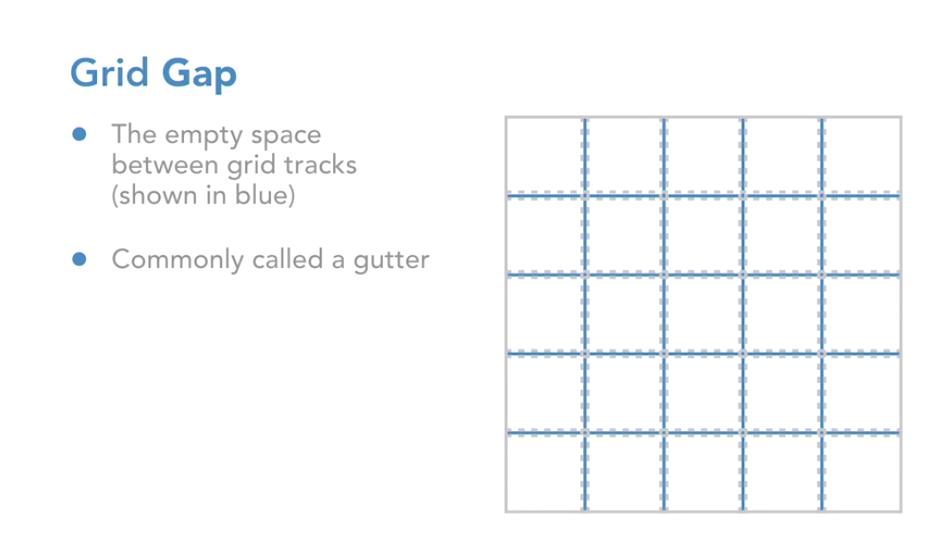
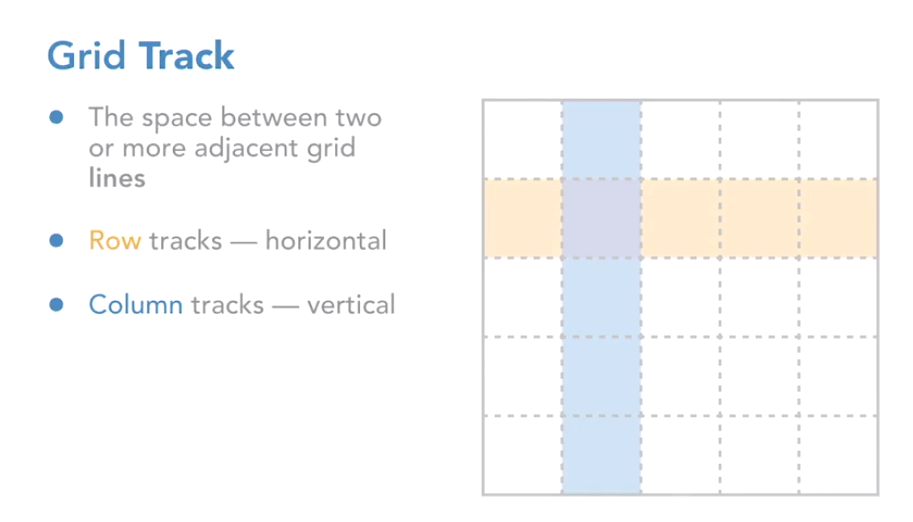
A grid track is the space between two or more horizontally or vertically adjacent grid lines. The row track is horizontal and the column track is vertical. The grid area covers one or more cells. The purpose of the grid area is to define the grid area that can be referenced when placing grid items. Finally, grid lines have no width by default, which means that each grid line is relative to the next grid line. Grid gaps create a uniform gutter between each track, and you can choose to define column gaps, row gaps, or column and row gaps. Keep in mind that when we use grid tracks, we are actually creating a blank space between each grid track, which in turn means that any colors or items appearing behind the grid will now pass through this grid The gap glows.
Trying to provide the wrong statistics to the wrong audience won’t work. You need to tailor the content on your site to the user groups you care about most. Fortunately, in general, most visitors to your site will have many of the same behavior. Once you have figured out what these behaviors are, you can design a user experience that suits these people on demand. Therefore, the first step of the process has nothing to do with the tools you use or the platforms you will develop. Instead, you need to spend some time thinking about who to optimize your website design for. It’s worth taking the time to outline the attributes of the visitors you care about, what they value, what their goals are and what issues might prevent them from using your site
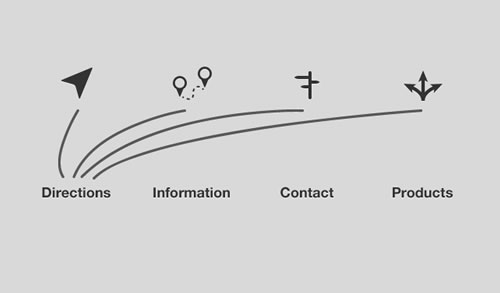
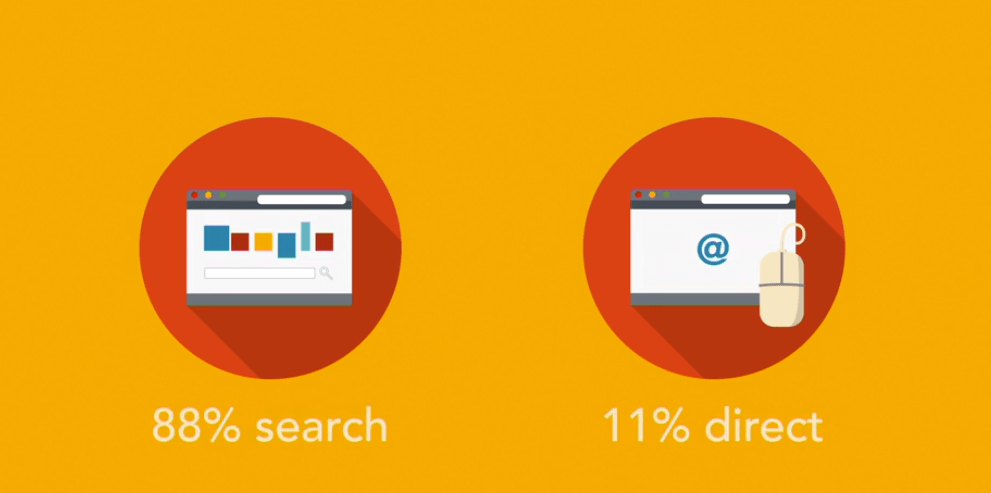
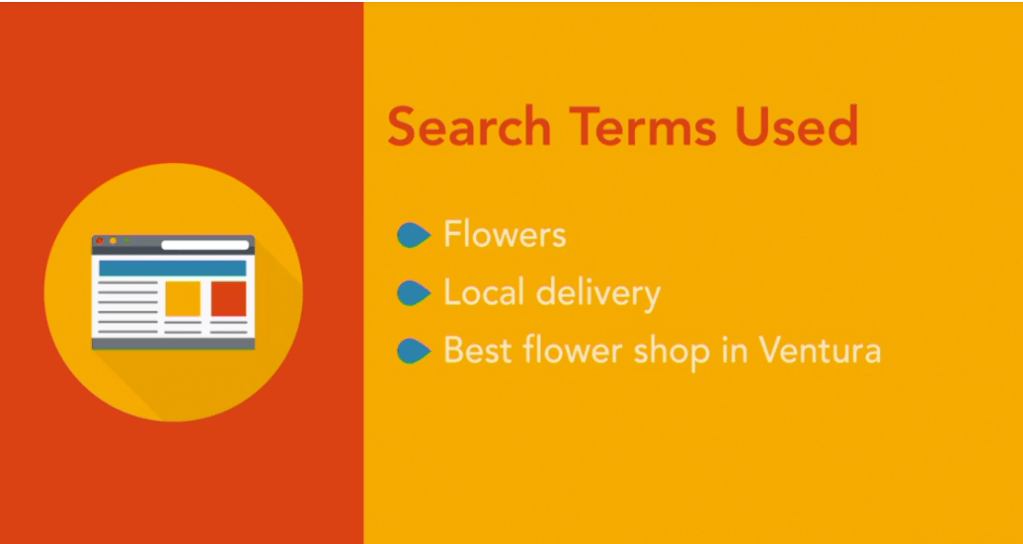
We should check the website statistics. Search engines or links often refer more visitors than direct visitors. We can use these statistics to find out what people are aiming for, which can help you clarify what visitors want from your site.
If the information your visitors are looking for is cluttered, it will be harder to find. Simple design does not mean boredom. I mean, all elements of the page should help tell the story, and if they don’t help, they should be removed.
1.What are the pain points for web designers?
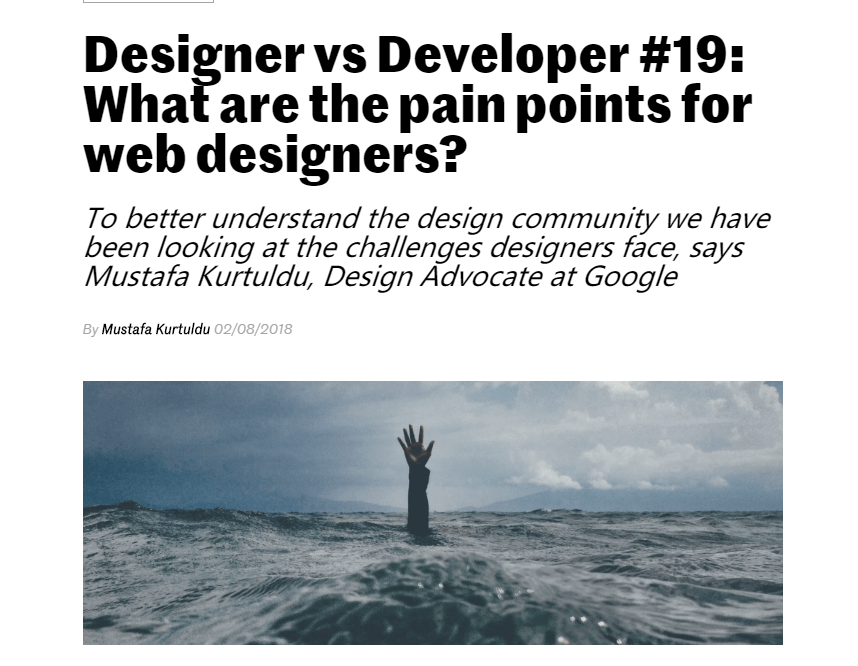
The first article is about What are the pain points for web designers. The author was invited to meet with the 2018 winners and have a round table discussion. Common themes were about focusing skill sets.
The author mentioned that there is something we need to learn.
We are a tooling focused industry, and they change so much. The author has used maybe rough eight different tools, from Photoshop to Sketch. It can be said that it is a very complicated problem.
Of course there is Cross-browser support is lacking crucial features. Designers need to understand developer tooling, to better scope out what is possible. Author thinking using paired programming or the design process described above can help.
Responsive design is still challenging. Author think this is in part due to the tools we use; he would love Chrome Design Tools that would help turn the browser into a creative tool. This space is where I think the next evolutionary step for site and web app creation is at. Mozilla is doing some fantastic work in this space, with their layout and shapes tooling.
All in all the challenges that we face seem to be all the age-old ones. Process, tools, and respect.


 Vincentmedia